
Ningún producto
Producto añadido correctamente a su carrito de la compra
Hay 0 artículos en su carrito. Hay 1 artículo en su cesta.





-
Lucien Goldmann. La formació d'un...
Lucien Goldmann. La formació d'un intel·lectual 164 páginas / 2024
14,00 €En stock -
-
-
-
-
-
-
-
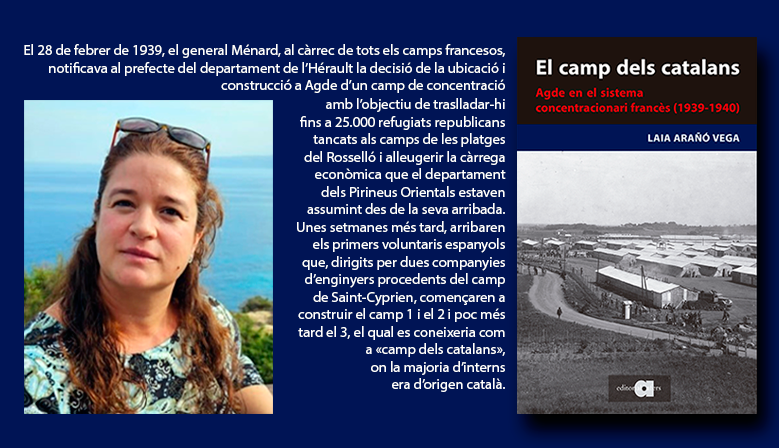
El camp dels catalans. Agde en el sistema...
El camp dels catalans. Agde en el sistema concentracionari francès (1939-1940) 430 pàgines / 2024
22,00 €En stock -
-
El Segon Reich i Catalunya. Alemanya vista...
El Segon Reich i Catalunya. Alemanya vista des de la cultura i la política catalanes entre 1890 i 1914 248 páginas / 2024
19,00 €En stock -
-
-
-
-
-
-
Sou lo que podeu mostrar que haveu begut...
Sou lo que podeu mostrar que haveu begut d'aquesta font. Homenatge al professor Albert Rossich 608 pp. / 2023
26,00 €En stock -
Els fets de Prats de Molló. I Jornades...
Els fets de Prats de Molló. I Jornades d'Història i Debat Nacional 126 pp. / 2023
18,00 €En stock -




















-
Els valencians, des de quan són valencians?
Los valencianos, ¿desde cuando son valencianos? Edición en catalán 196 pp.
16,00 €En stock -
L'arqueologia del món modern i...
ADVERTÈNCIA: DEBIDO AL PESO DEL PDF EL PROCESO DE COMPRA ES UN POCO LENTO.
5,00 €En stock -
En l'horitzó de la història ibèrica....
En el horizonte de la historia ibérica. Pueblos, tierras, soberanías (siglos V-XV)
22,00 €En stock -
-
-
-
El pensament nacional a Europa. Una...
El pensament nacional a Europa. Una història cultural 490 pp. 2019
22,00 €En stock -






-
Doro Balaguer. Pintura, política, vida
Doro Balaguer. Pintura, política, vida
20,00 € 40,00 €¡Precio rebajado!In Stock -
Històries e conquestes del realme d'Aragó...
Històries e conquestes del realme d'Aragó e principat de Catalunya
15,00 € 20,00 €¡Precio rebajado!In Stock -
-
Sense memòria no hi ha futur. Actes de les...
Sense memòria no hi ha futur. Actes de les III Jornades de Joves Historiadors i Historiadores de la Universitat de Barcelona
12,00 € 22,00 €¡Precio rebajado!In Stock -
Crònica de la vall i el mercat
Crònica de la vall i el mercat 2017, 140 pp.
9,00 € 16,00 €¡Precio rebajado!En stock -
-
Fons La Revista Blanca. Federica Montseny...
Fondo La Revista Blanca. Federica Montseny y la mujer nueva (1923-1931)
5,00 € 19,00 €¡Precio rebajado!In Stock -
Jaume Miravitlles. Informes sobre...
Jaume Miravitlles. Informes sobre la economía franquista de postguerra
5,00 € 19,00 €¡Precio rebajado!In Stock -
Fons Serra i Moret (1939-1963). Cartes,...
Fondo Serra i Moret (1939-1963). Cartas, artículos de prensa y documentos
5,00 € 19,00 €¡Precio rebajado!In Stock -
Fons Jordi Arquer. Correspondència...
Fondo Jordi Arquer. Correspondencia (1939-1981)
5,00 € 19,00 €¡Precio rebajado!In Stock -
El Fons MIL. Entre el record i la història
El fondo MIL. Entre el recuerdo y la historia
5,00 € 19,00 €¡Precio rebajado!In Stock -
Fons José María Valverde (1942-1996)....
Fondo José María Valverde (1942-1996). Fragmentos de una biografía intelectual
5,00 € 19,00 €¡Precio rebajado!In Stock -
Herois anònims. La història d'en Romuald...
Herois anònims. La història d'en Romuald Grané Vilaseca 2016, 212 pp
5,00 € 19,00 €¡Precio rebajado!En stock -
L'oportunisme de Franco. Un informe sobre...
El oportunismo de Franco. Un informe sobre la cuestión judía (1949) 138 pp. 2013
5,00 € 19,00 €¡Precio rebajado!In Stock -
Fons Josep Maria Trias Peitx (1900-1979)
Fondo Josep Maria Trias Peitx (1900-1979) 162 pp. 2013
5,00 € 19,00 €¡Precio rebajado!In Stock -
La CNT. Papers d'exili i clandestinitat
La CNT. Papeles de exilio y clandestinidad 202 pp. 2013
5,00 € 19,00 €¡Precio rebajado!In Stock -
Fons José Del Barrio (1936-1976)
Fondo José Del Barrio (1936-1976)
5,00 € 19,00 €¡Precio rebajado!In Stock -
Fons Miquel Ferrer i Sanxis (1939-1989)
Fondo Miquel Ferrer i Sanxis (1939-1989)
5,00 € 19,00 €¡Precio rebajado!In Stock -
Fons Albert Pérez i Baró
Fondo Albert Pérez baró 130 pp. 2015
5,00 € 19,00 €¡Precio rebajado!In Stock -
Pssst... Passa-ho. La lluita per la...
Pssst... pásalo. La lucha por la democracia en Cataluña (1939-1975) 206 pp. 2011
5,00 € 19,00 €¡Precio rebajado!In Stock




















Síguenos en Facebook

-
Gastos de envío
Envío 24/48 h. Gratuito para compras superiores a 40 €
-
Atención telefónica
En horario de oficina de lunes a viernes.
-
Forma de pago
Pago con tarjeta de crédito, débito, Paypal o transferencia bancaria.